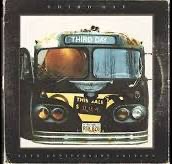
The Bus Album at 30, Part 1
One thing I’ve noticed after being a musician for so long is how time starts folding over on itself. When I play a song live, I’m simultaneously in the moment while mentally jumping back to the person I was when we recorded it. As the Bus album turned 30 this summer, I thought it might be fun to take a look back at who I was then. In a follow up post, I’ll share what it feels like to listen to these songs now.
When I look back at the release of the Bus record from 30 years ago, I don’t think much about the studio. I think about everything that was going on in my life at that time. I was in school full-time. I worked several jobs, sometimes more than one at a time. The band fit into whatever little bit of free time I had left over. With later albums, I think about being in the studio, rooting on the other guys when I’m not laying down my parts, and hearing the songs gradually take shape. The Bus album was just a big blur.
Making a record back then was different than it is now. We didn’t have the automation and digital recording and the ability to edit things after they’re put down. We didn’t have the benefit of a recording budget and the studio time that comes with it. But I didn’t realize any of that was different than how you’re supposed to make a record—it felt just as chaotic as the rest of my life.
David Mardis, our producer, worked out a deal with the studio that if he booked a day’s worth of recording time, it was good for a full 24 hours. So he would stay up for 2 or 3 days straight, chug some coffee, and keep on recording. I recorded most of the acoustic guitars in one marathon session between 3 and 6 AM. It’s not that I don’t have a lot of nostalgia—I barely remember it.
That record was also different because it was our first album. It represented the evolution of the band. And if you listen carefully, you can literally hear the Third Day sound take shape. Especially because we recorded it in three sessions spread out over a couple of years, and literally released three different versions of the album.
In those early days of the band, having a new song changed everything. We were always writing, so every few weeks we would add a new song to the set, and it energized the whole thing. When Mac and I first started, we saw Rich Mullins do an acoustic set in Atlanta and said, “That’s what we want to do.” So for the next two years or so, that’s what we did. Mac and I on guitar, Mac on vocals, and sometimes our friend Billy Wilkins on keys. Everything was acoustic. The best example on the Bus album of this era would be “Livin’ for Jesus,” because it’s still pretty acoustic.
After we added Tai and David, we wanted to rock more. But we still had mainly acoustic instruments. So we were acoustic guitars with bass and drums. Whenever we saw MTV Unplugged we were like, “So what? That’s what we do every show.” “Holy Spirit” is probably the best example of this stage of our evolution, but songs like “Did You Mean It,” “Praise Song,” and even “Mama” started out as acoustic with bass and drums.
This is going to sound kind of weird, but one of the most pivotal times in our early days was when I quit the band. Overwhelmed by the grind of school and work and trying to fit the band in the margins, something had to give. I went with the obvious and gave up the band. The other guys were bummed but understood, and quickly found a replacement. But they kept asking me to come back and play the “important” gigs, which seemed to be, well, almost all of them. I’ll never forget when I heard the demos for “Blackbird” and “Forever.” Those were the first recordings that sounded like what we were going for. We had learned how huge a band can sound with two guitars. Things didn’t work out with the new guitarist, but there wasn’t much of a discussion. I stayed in the band, and we got another guitarist. Two guitars seemed to be the key to the sound we were going for.
The last couple of songs we recorded, unsurprisingly, sound the most like Third Day to me. “Consuming Fire” was the home run song on the Gray Dot version of the album we released in 1995. “Nothing At All” was added for the Reunion release in 1996. And “Praise Song,” with the dream-come-true addition of Rich Mullins on hammered dulcimer, would hint at the kinds of songs we were able to take to Christian radio a couple of short years later.
While my memories of the Bus record don’t include very many fun stories, they do represent something else. More than defining the sound of the band, those recordings represent the defining years of my life.